How I got here
I'm a first-generation American. My parents are Portuguese immigrants, and growing up between two cultures — two languages, two ways of seeing the world — taught me something early: you can't truly help someone until you understand where they're coming from.
I stumbled into this field. Genuinely.
I was studying psychology in undergrad when a job posting for a BT crossed my path. I didn't have a plan. I just applied. And from the very first session, I knew I was exactly where I was supposed to be.
Working with children and families felt right in a way nothing else had. So I stayed. And as I worked under different BCBAs — some who were exceptional, some who weren't — something became very clear to me.
The quality of supervision changes everything. It changes what a BT believes they're capable of. It changes how a family experiences care. It changes what a child's day actually looks like.
I saw both sides. And I decided I didn't want to be a bystander. I wanted to be part of the change.
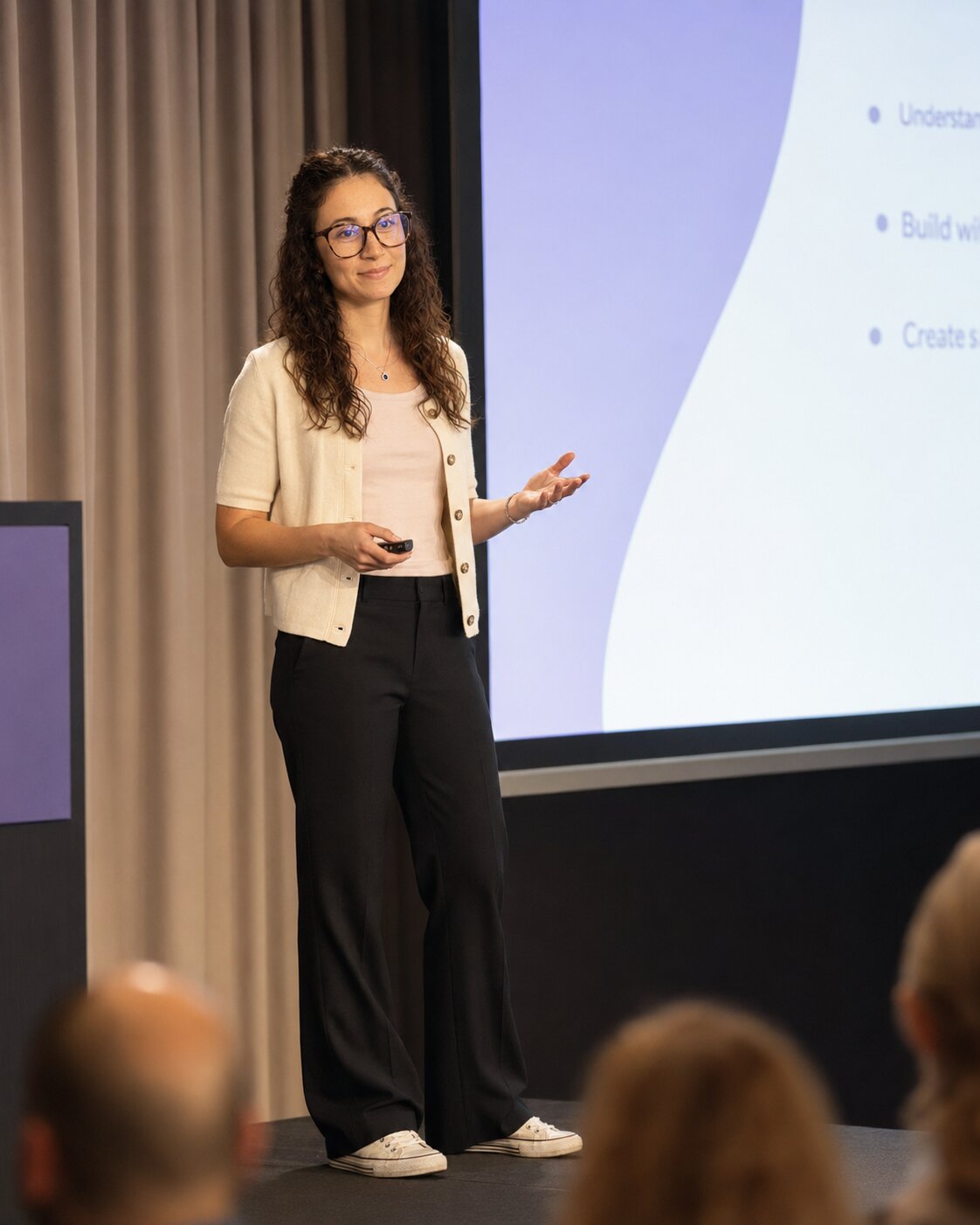
That decision is why I became a BCBA — and why, these days, so much of my work is teaching. Supervising candidates. Presenting at conferences. Building CEUs and trainings for the practitioners coming up behind me. If the quality of supervision changes everything, then teaching people to supervise well is the highest-leverage work I can do. That's where I've put my focus.
"I saw what good supervision does for a BT. And I saw what bad supervision takes away. I couldn't unsee either."
The good BCBAs I worked under showed me what this field can be at its best. They checked in before sessions. They asked what I thought. They explained the why behind every decision. They made me feel like my presence mattered — not just my data sheets.
The not-so-good ones showed me something too. What it feels like to implement programs you don't fully understand. To have your concerns brushed aside. To dread the supervision visit instead of looking forward to it. To slowly start doubting yourself in a job you once loved.
I watched what that did to BTs around me. To their confidence. To the quality of care their clients received. To how long they stayed in the field before burning out.
I decided that if I was going to become a BCBA, I was going to do it differently. Not perfectly — but intentionally. With the BT's growth and the family's experience at the center of every decision.
That's still the standard I hold myself to every day.
What I actually think is wrong
Our field talks a lot about hours. How many hours of ABA. How to get more hours approved. How to keep the hours going.
I think we've gotten it backwards.
We pour resources into service delivery and almost none into the people delivering it. BTs get a caseload and a checklist. Supervision gets squeezed into whatever time is left. And then we wonder why practitioners burn out and quality suffers.
The best thing we can do for clients is invest in the humans around them — the technicians, the supervisors, the families — teaching them well enough that our role shrinks over time. Good practice should build independence, not dependence. Every session should hand more of the tools back to the people who'll be there long after we're gone.
That's the work I believe in. And it's why I teach.
Why culturally responsive practice matters to me
I'm a first-generation American — my parents are Portuguese immigrants — and I grew up in a household figuring out a new country in real time, in a language that wasn't always the default. That experience shapes how I think about our field.
So many of the families in ABA are navigating a system that wasn't built with them in mind. Too often their language, culture, and context get treated as obstacles instead of starting points. I know what it means to need someone in your corner who actually gets it.
That's why culturally responsive practice is central to how I teach. I've presented on training ABA professionals internationally and led workshops on building respectful, humble relationships with diverse families. I want every practitioner I train to see culture not as a footnote, but as part of doing this work well.
What I believe
- How we train people is how we change the field. Better practitioners mean better care. Teaching is the highest-leverage work there is.
- Behavior therapists deserve real support. Not just task lists. Not criticism disguised as supervision. Genuine mentorship.
- Everyone deserves to be heard. The child in the room. The technician holding it together. The parent nobody asked.
- Families are partners, not caseloads. They're the constant long after we're gone. We should teach with that in mind.
A note on families
I still work with families. Parent coaching is available 1:1 in English, Spanish, or Portuguese, for parents who want to understand the why behind their child's behavior. Most of my work now centers on teaching and supporting ABA professionals — but families are always welcome. Reach out →
When I'm not working
I'm reading. I'm spending time with the people I love. I'm probably drinking coffee and thinking about my next trip.
I keep my personal life mostly private here — but what I'll say is this: life outside of work keeps me humble, and humility is the thing I most want to bring into every session, every supervision call, and every course I teach.
Credentials
- Post-Graduate Certificate in Applied Behavior Analysis, University of Massachusetts Lowell, 2021
- M.A. in Psychological Services, Kean University (Nathan Weiss Graduate College), 2016
- B.A. in Psychology, Kean University, 2013
- Board Certified Behavior Analyst (BCBA)
- International Behavior Analyst (IBA)
- Licensed Behavior Analyst — New Jersey and Minnesota
- Authorized Continuing Education (ACE) provider, Behavior Analyst Certification Board
- Approved continuing education provider through IBAO and QABA
- Available for adjunct instruction and university fieldwork supervision
- Presenter, ABAI Conference (2025)
- Workshop facilitator, IBAO-credited (2026)
- 10+ years in early intervention
- Trilingual: English, Spanish, and Portuguese
Credentials tell you what I've done. Values tell you who I am.